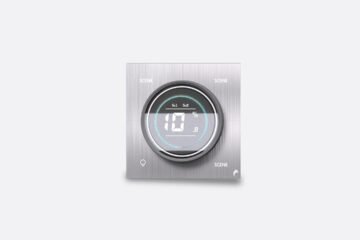
Direct Answer Snippet: Smart home automation in Indian electrical systems requires two fundamental infrastructure elements: a continuous neutral line routed to every switchboard and a minimum wall back-box depth of 2.5 inches (65 mm). Standard Indian switches interrupt only the live phase; however, smart modules and touch plates contain microprocessors and Zigbee radios that need uninterrupted current flow. Planning this during the raw conduit or pre-wiring phase prevents expensive wall-cutting, relay burnout, and physical clearance failure.
A home automation project succeeds or fails long before touch panels or wireless hubs arrive on site. While consumer marketing portrays home automation as simple plug-and-play gadgets, true architectural automation behaves as a fundamental electrical dependency.
Whether outfitting a new multi-storey kothi or upgrading a luxury builder floor in Delhi NCR, two structural factors dictate your system’s stability: continuous neutral wiring and adequate back-box clearance. Missing either prerequisite transforms a clean retrofit into messy civil work, repainting, and unexpected rewiring expenses.
Why Smart Switches Require a Continuous Neutral Line
Traditional residential electrical wiring in India uses single-pole mechanical switches that simply break the live (phase) conductor to cut power to a light loop or fan. The return path—the neutral wire—runs directly along the ceiling slab or conduit to the fixture, bypassing the wall switchboard entirely.
While this loop suffices for a mechanical switch, it breaks the functionality of an intelligent automation device.
Traditional Mechanical Circuit:
[Live Phase] ---- (Open/Closed Switch) -----------------> [Bulb] ---- [Neutral in Slab]

Smart Automated Circuit:
[Live Phase] ----+---- [Smart Relay / Zigbee Radio] ----+----> [Bulb] ---- [Neutral in Slab]
                 |                                      |
                 +---- [Continuous Neutral Line] -------+
1. The Microprocessor Never Sleeps
A smart device—whether a hidden Blackcat Zigbee Retrofit Switch Module or an Exotic Series Glass Touch Plate—is not a passive contact. It is an active microcomputer containing:
- A 2.4 GHz Zigbee 3.0 transceiver.
- Logic microcontrollers that register physical touches, app inputs, and scene schedules.
- Status LEDs and dual-color backlit touch indicators.
To keep its internal radio communicating with your gateway when lights are turned “OFF,” the module requires a complete, unbroken circuit. The neutral wire provides this return path, ensuring constant 230V operating power to the electronics without leaking current into the load.
2. The Flaw of “No-Neutral” Bypass Modules
“No-neutral” smart switches sold online bleed a minute trickle of current through the load to keep their microchips alive when off. In modern Indian homes equipped with sensitive architectural LEDs, COBs, or magnetic profile tracks, this trickle current causes noticeable issues:
- Flickering and Ghosting: LEDs faintly pulse or stay dimly lit when turned off.
- Relay Premature Burnout: Sudden line spikes and inductive kickback from fans degrade capacitor life.
- Phantom Energy Drain: Capacitive bypass dummies fitted across light fixtures introduce unnecessary failure points in ceilings.
Dedicated neutral wiring supplies clean operating current, completely eliminating ghost glow and flickering across all lighting loops.
Back-Box Depth: The Physical Clearance Blueprint
Indian electrical installations commonly use pressed sheet metal (GI) back-boxes embedded into brickwork before plastering. Most standard electrical contractors default to shallow 1.5 to 1.75-inch boxes (38–45 mm) to minimize wall chasing depth.
While shallow boxes comfortably house slim mechanical switches, they create severe physical bottlenecks during smart home commissioning.
+-------------------------------------------------------------+
|               WALL CONDUIT & BRICKWORK                      |
|                                                             |
|   +-----------------------------------------------------+   |
|   | 2.5" to 3.0" Deep GI Metal Box                      |   |
|   |                                                     |   |
|   |  [ Wires: Live, Neutral, Returns, Earth ]           |   |
|   |  \ \ \ \ \ \ \ \ \ \ \ \ \ \ \ \ \ \ \ \            |   |
|   |   +---------------------------------------+         |   |
|   |   |   Blackcat Compact Retrofit Module    |         |   |
|   |   +---------------------------------------+         |   |
|   |      |                                              |   |
|   |      v (Clearance buffer: Heat dissipation)         |   |
|   |   +---------------------------------------+         |   |
|   |   | Traditional Designer Switch / Plate   |         |   |
|   |   +---------------------------------------+         |   |
|   +-----------------------------------------------------+   |
+-------------------------------------------------------------+
Why Depth Dictates System Reliability
- Housing the Module: A multi-channel smart relay, such as the Blackcat Zigbee 3 Node + 1 Fan Module, measures between 18 mm to 24 mm in thickness.
- Terminal Wire Volume: An 8-module switchboard contains dense internal wiring: 1.5 sq mm inverter lines, 2.5 sq mm phase lines, dedicated neutrals, earthing, and individual load returns.
- Heat Dissipation & Relay Longevity: Packed wires squeezed tightly against a relay generate trapped heat. Providing an unobstructed 1-inch air buffer inside the junction box keeps internal solid-state components operating at optimal temperatures.
- Flush Plate Alignment: Forcing a modular faceplate over an overstuffed shallow back-box causes plate warping, uneven gaps against wallpaper or Italian marble, and loose mechanical clicks.
Infrastructure Comparison: Standard vs. Smart-Ready
| Parameter | Standard Mechanical Wiring | Smart Automation Wiring (Blackcat Standard) | Impact on Installation |
|---|---|---|---|
| Neutral Line | Kept in the ceiling slab; omitted from wall switchboards. | Continuous loop routed directly inside every wall box. | Prevents LED ghosting, line noise, and radio dropouts. |
| Back-Box Depth | Shallow boxes: 1.5″ to 1.75″ (38 mm to 45 mm). | Deep heavy-gauge GI boxes: 2.5″ to 3.0″ (65 mm to 75 mm). | Accommodates modules, wire bunching, and heat dissipation. |
| Switch Integration | Tied to manufacturer-specific switchplates. | Dual Compatibility: Retrofit modules hide behind existing plates, or plates upgrade to Exotic Glass Touch panels. | Eliminates wall breakdown, masonry repair, and repainting. |
| Conduit Capacity | 20 mm conduits carrying only line loops. | 25 mm conduits accommodating neutral loops, phase lines, and sensor leads. | Prevents pinched wires and short circuits during pulling. |
| Inverter Phasing | Inverter and grid phases often cross-connected. | Strictly segregated phase pathways per switchboard. | Protects internal logic boards against back-voltage surge. |
Electrical Contractor’s Site Checklist (Raw & Pre-Wiring Phase)
- [ ] Mark Deep Boxes on Drawings: Ensure all modular back-boxes for automated zones are specified as deep boxes (minimum 65 mm / 2.5 inches deep).
- [ ] Pull Continuous Neutrals: Pull a dedicated 1.5 sq mm black neutral wire into every switchboard junction point—even where standard two-way switches or simple 1-way lighting loops are planned.
- [ ] Isolate Inverter Loops: Do not mix raw generator/grid neutral and local inverter neutrals inside the same module terminal; route clean common neutrals.
- [ ] Dedicated Motor Drops: For motorized curtains, run an unswitched continuous live, neutral, and earth point inside the false ceiling curtain pelmet/valance pocket (placed 2 inches away from the track end).
- [ ] Zigbee Gateway Hardwire Point: Plan a centralized, unshielded low-height switchboard or network rack drop with RJ45 Cat6 connectivity for the Blackcat Pro Wired Dual Zigbee Gateway.
Frequently Asked Questions
Can I install smart automation if my house does not have neutral wires?
While no-neutral modules and battery-driven solutions exist, they are prone to LED flicker, unexpected offline dropouts, and premature burnout. If your home is already plastered, an experienced electrician can pull a continuous neutral wire from the nearest ceiling light point down through the existing conduit without breaking the wall.
What happens if my back-boxes are only 1.5 inches deep?
If your home already has shallow junction boxes installed, deep modular retrofit relays cannot fit comfortably behind traditional switches. In this scenario, replacing traditional switch plates with surface-mount Blackcat Exotic Series Glass Touch Plates resolves the depth crunch, as their relays and capacitive glass surfaces sit flush within a unified frame.
Does adding neutral wires increase my electricity bill?
No. The continuous neutral line simply provides a return path for the smart module’s low-power logic chip and Zigbee radio. A smart automation node typically consumes less than 0.5 to 1 Watt in standby mode.
Avoid Costly Site Rework with Blackcat Automation
Planning your electrical layouts early protects your architecture, budget, and design vision. Blackcat Automation bridges the gap between interior design aesthetics and electrical engineering realities.
- Visiting the Experience Center: Bring your architectural floor plans to our showroom at 212A, First Floor, Main, Rama Market, Pitampura, New Delhi to test tactile glass touch plates, silent motorized shading, and tunable lighting in person.
- Complimentary Site Readiness Audit: Building or renovating your property in Delhi NCR? Fill out our Smart Home Site Readiness Assessment or connect directly with our engineering team at +91 95991 79712 to verify your box depths and neutral lines before conduits are plastered.